
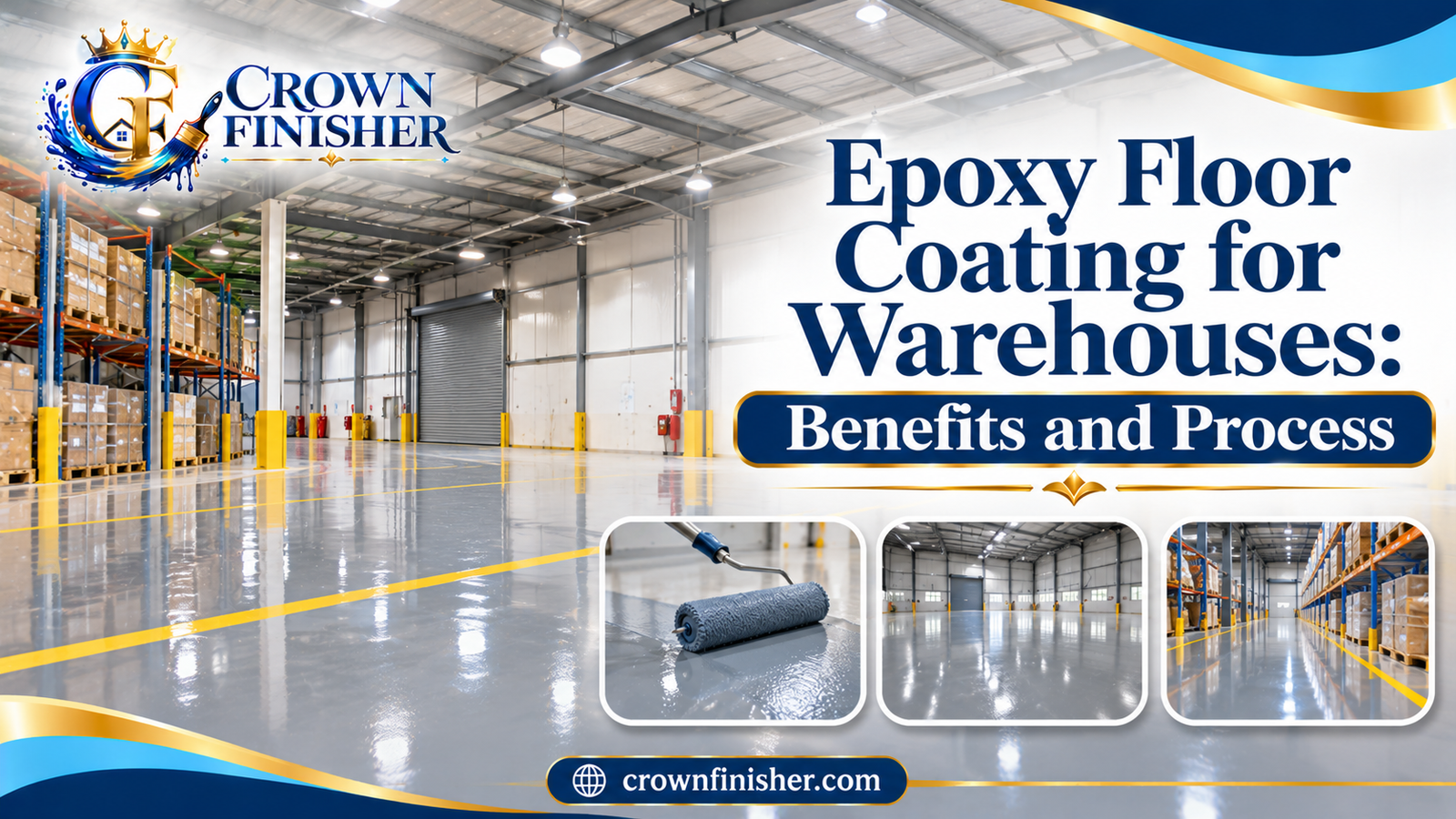
A warehouse floor works harder than almost any other surface in a business. Forklifts, pallet jacks, heavy racking, spills and constant foot traffic slowly wear bare concrete down, creating dust, stains and cracks that are hard to clean and easy to trip on.
Warehouse epoxy flooring solves many of these problems. A properly installed epoxy system turns tired concrete into a tough, sealed, easy to clean surface that is brighter, safer and better organised. This guide explains the benefits, the main types of epoxy systems, how the installation process works, and what to know about downsides and lifespan.
Table of contents
What is warehouse epoxy flooring?
Epoxy is a two part resin made from a base and a hardener. When the parts are mixed and applied to prepared concrete floors, they react and cure into a hard, seamless coating that bonds strongly to the slab. It is one of the most common types of resin flooring used in warehouses, factory floors, workshops and commercial kitchens.
Epoxy can be applied as a thin sealing coat or built up into thick, heavy duty layers, and it can be finished with anti slip texture, coloured zones and line marking.
Benefits of epoxy floor coating for warehouses
Handles forklift traffic
Durability and impact resistanceA well installed epoxy system stands up to forklift traffic, pallet jacks and heavy loads far better than bare concrete, which dusts and wears under constant use.
Chemical resistance
Protection from spillsEpoxy resists oils, fuels, many cleaning chemicals and other common warehouse spills, which would otherwise soak into and stain porous concrete.
Easy to clean, less dust
Hygiene and presentationThe sealed, seamless surface stops concrete dust and is quick to sweep and mop, which helps protect stock and equipment and keeps the site presentable.
Brighter and safer
Visibility and organisationLight coloured epoxy reflects more light around the warehouse, while anti slip finishes and line marking help separate walkways, loading zones and storage areas.
Types of epoxy floor systems
| System | Best for | Notes |
|---|---|---|
| Epoxy roll coat | Light traffic, storage areas, dust sealing | Thinner and faster to apply, but wears sooner under heavy forklift use |
| High build epoxy | General warehouse and factory floors | Thicker layers for better wear and impact resistance |
| Self levelling epoxy | Smooth, seamless floors with heavy use | Flows out to a flat, glossy finish and evens out minor surface flaws |
| Anti slip epoxy | Wet areas, ramps, loading docks and walkways | Aggregate is added to the coating to improve grip underfoot and under wheels |
| Epoxy with polyurethane topcoat | Areas with sunlight or extra wear | The topcoat adds UV stability and abrasion resistance |
The warehouse epoxy flooring process
The success of any epoxy floor comes down to preparation. Here is how a professional installation usually runs.
Assess the slab
The concrete is inspected for cracks, damage, old coatings and contamination, and tested for moisture. Damp slabs need a suitable moisture tolerant primer or system, or the coating can lift.
Floor grinding
Diamond floor grinding or shot blasting removes the weak top layer, old coatings and contaminants, and opens the surface so the epoxy can bond properly. Dust extraction keeps the site clean.
Repair cracks and joints
Cracks, chips and damaged joints are filled and levelled so the finished floor is smooth and the coating is not weakened at those points.
Prime the concrete
An epoxy primer soaks into the prepared concrete and creates a strong bond for the coats that follow.
Apply the base coats
The main epoxy layers are applied by roller, squeegee or trowel, depending on the system and thickness required.
Add anti slip and topcoat
Anti slip aggregate is broadcast where needed, then a final topcoat seals the surface and sets the finish and sheen.
Line marking
Walkways, forklift routes, loading bays and storage zones are marked in durable floor coating colours.
Cure and return to service
The floor is left to cure before foot traffic, then forklifts and full loads, following the product data sheet.
To keep a warehouse running, large floors are often coated in sections, after hours or over weekends. Planning the stages around stock movement and racking early makes a big difference to downtime.
Line marking and safety zones
Epoxy floors are ideal for clear, long lasting line marking. Common layouts include:
- Pedestrian walkways separated from forklift routes.
- Loading bay and dock zones.
- Racking aisles and pallet storage bays.
- Hazard areas around machinery, chemical storage and exits.
- Fire equipment and emergency exit zones kept clear.
Clear markings help with workplace safety and keep the site organised. Your safety officer should confirm the layout suits your operations and obligations.
What is the downside of epoxy flooring?
Epoxy is not perfect for every situation. The main downsides are:
- Slippery when wet unless an anti slip finish is used in wet or sloped areas.
- Downtime for grinding, coating and curing, which needs to be planned around operations.
- Preparation is critical, and poor grinding or a damp slab can cause peeling.
- UV sensitivity, as many epoxies yellow or chalk in sunlight near open roller doors unless topcoated.
- Heavy impacts from dropped steel or loads can chip the coating, so repairs are needed over time.
What is the lifespan of epoxy flooring?
Lifespan depends on the system thickness, the quality of preparation and how hard the floor is used. A thin roll coat in a busy forklift area may need recoating within a few years, while a thick, well installed system in lighter use can last well over a decade. Regular cleaning and timely topcoat maintenance extend the life of any epoxy floor.
- Sweep and mop regularly with cleaners suited to epoxy.
- Clean up spills promptly, especially harsh chemicals.
- Use mats or protection under sharp or heavy equipment feet.
- Repair chips early so damage does not spread.
- Plan a recoat of high traffic lanes before the coating wears through.
Is epoxy cheaper than concrete?
Epoxy is a coating applied over concrete, not a replacement for it. Coating an existing slab is usually far less disruptive and less costly than replacing or resurfacing the concrete itself. Compared with leaving concrete bare, epoxy adds an upfront cost but can reduce cleaning, dust and long term maintenance. The best value depends on the floor's condition and how the space is used.
Warehouse epoxy flooring in Melbourne
Crown Finisher Painters has more than 10 years of experience and over 600 completed projects across Melbourne. Our epoxy floor coatings team prepares and coats warehouse, factory and workshop floors, including floor grinding, crack repairs, anti slip finishes and line marking.
We also provide warehouse painting, industrial painting and protective coatings for steel and concrete. To learn more about how coatings protect surfaces, read our guide to what protective coatings are and where they are used.
Frequently asked questions
What is the downside of epoxy flooring?
Epoxy can be slippery when wet unless an anti slip finish is used, it needs downtime for grinding, coating and curing, and it relies on careful preparation to avoid peeling. Many epoxies also yellow in sunlight without a UV stable topcoat, and heavy impacts can chip the surface.
What is the lifespan of epoxy flooring?
It depends on the system thickness, preparation and traffic. A thin roll coat in a busy forklift area may need recoating within a few years, while a thick, well installed system in lighter use can last well over a decade. Regular cleaning and timely topcoat maintenance extend its life.
Is epoxy cheaper than concrete?
Epoxy is a coating applied over concrete rather than a replacement for it. Coating an existing slab is usually far less disruptive and less costly than replacing or resurfacing the concrete, while compared with bare concrete it adds an upfront cost but can reduce cleaning and maintenance.
Where can I buy bulk epoxy floor coating in Australia?
Bulk epoxy floor coatings are sold through trade paint centres, industrial coatings suppliers and specialist flooring suppliers, including the protective coatings ranges of major brands such as Dulux. Commercial systems need correct mixing, preparation and application, so many businesses have a contractor supply and install the right system.
Who provides epoxy floor coating for warehouses in Melbourne?
Crown Finisher Painters provides epoxy floor coating for warehouses, factories and workshops across Melbourne, including floor grinding, crack repairs, anti slip finishes and line marking, with free, written quotes.
Final thoughts
Warehouse epoxy flooring turns worn, dusty concrete into a tough, sealed and organised surface that handles forklift traffic and spills. Choosing the right system for your traffic, preparing the slab properly and planning the work around operations are what make an epoxy floor last.
When your warehouse floor is ready for an upgrade, contact Crown Finisher Painters for a site inspection and a free, written quote.