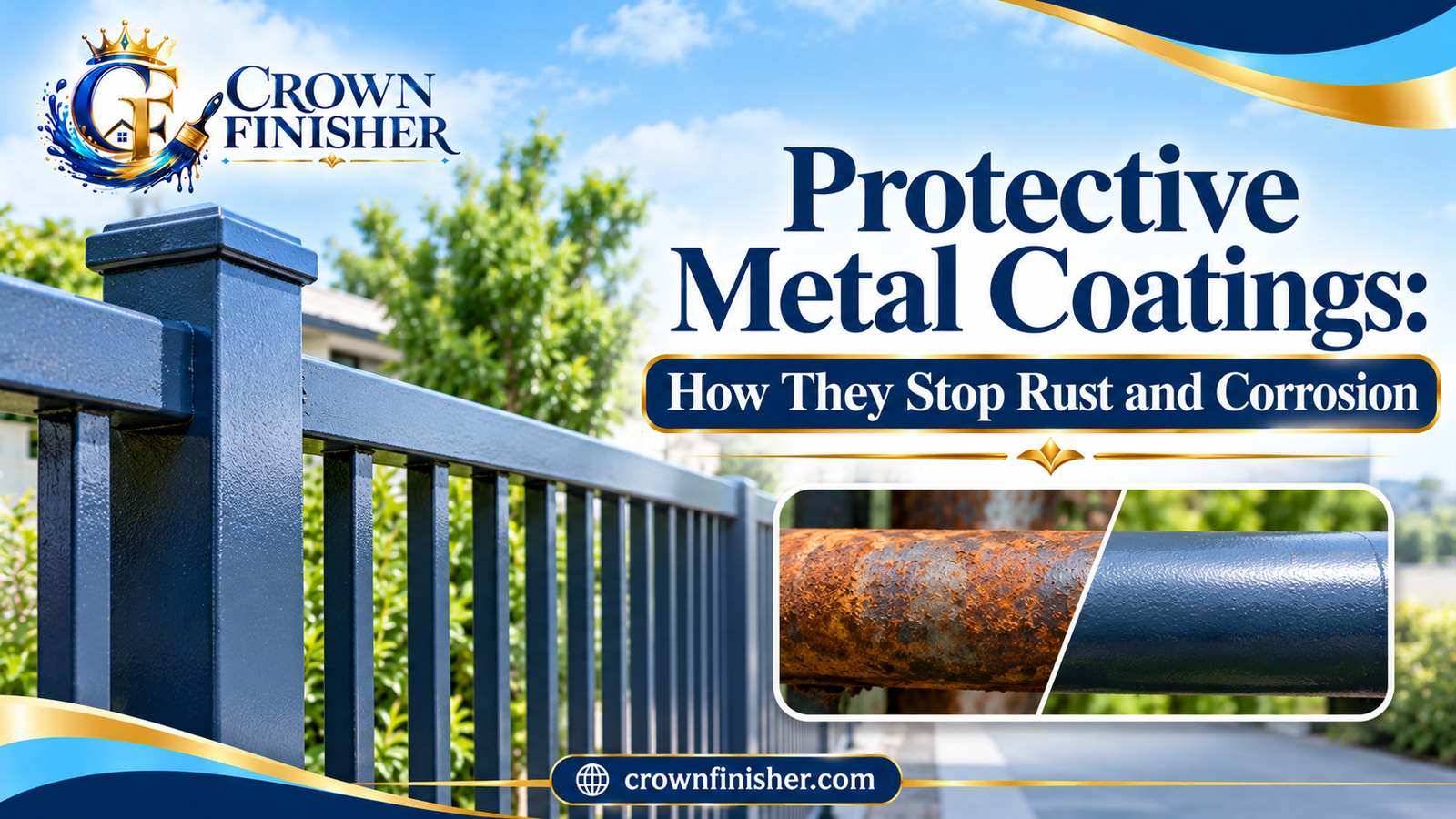
Rust never sleeps. Leave bare steel outside for a few days and orange spots appear. Leave it for a few years and it can eat right through gates, railings, roof sheets and structural beams.
The right protective coating for metal stops that process before it starts. This guide explains why metal corrodes, how different coatings protect it, and how to choose and apply a coating system that keeps steel, galvanised steel, aluminium and metal roofs looking good and working properly for years.
Table of contents
Why metal rusts
Rust is the result of oxidation. When iron or steel is exposed to oxygen and moisture, it slowly turns into iron oxide, the flaky orange material we call rust. Rust takes up more space than the original steel and has no strength, so it pushes paint off, weakens the metal and keeps spreading.
Several things speed corrosion up:
- Moisture from rain, dew, condensation and water that pools on flat surfaces.
- Salt in the air near the bay and the coast, which makes corrosion far more aggressive.
- Industrial pollution and chemicals that attack metal and coatings.
- Damaged coatings such as scratches, chips and worn edges that expose bare steel.
- Contact between different metals, such as copper and galvanised steel, which can cause galvanic corrosion.
Aluminium and stainless steel resist rust much better than plain steel, but they can still corrode, stain and lose their finish without protection.
How protective coatings stop corrosion
Every protective coating for metal works in one or more of three ways.
Barrier coating
A barrier coating forms a tight film that keeps water, oxygen and salt away from the metal. Epoxy, polyurethane and quality acrylic paints all act as barriers. The film must be continuous and thick enough, as any gap lets corrosion start underneath.
Rust inhibiting primers
Inhibitive primers contain pigments that slow down the chemical reaction at the metal surface. They give an extra layer of protection where the barrier is weakest, such as edges and welds.
Sacrificial zinc protection
Zinc corrodes more readily than steel. When zinc is in contact with steel, it corrodes first and protects the steel, even across small scratches. This is called cathodic protection, and it is how galvanising and zinc primer work.
Common protective coatings for metal
Hot dip galvanising
Best for: new structural and outdoor steelSteel is dipped in molten zinc, which bonds to the surface inside and out. It gives long lasting sacrificial protection and can be painted over with the right primer for colour.
Zinc rich primer
Best for: blasted steel and repairsA primer loaded with zinc dust that protects steel in a similar way to galvanising. Widely used as the first coat on structural steel and for touching up damaged galvanising.
Epoxy coatings
Best for: harsh and chemical environmentsTwo pack coatings with excellent adhesion and barrier strength. Epoxy primers and intermediate coats are the backbone of many industrial systems but need a UV stable topcoat outdoors.
Polyurethane and acrylic topcoats
Best for: colour, gloss and weatherThe final layer that faces the sun and rain. Polyurethane gives a hard, glossy, colour stable finish. Acrylic suits roofs, fences and general exterior metalwork.
Powder coating is another popular option for gates, frames, balustrades and furniture. It is applied in a factory and baked on, giving a tough and even finish, but repairs on site need a compatible touch up paint.
Which coating is best for metal?
There is no single best coating for every job. It depends on the metal, the environment and how the item is used. For a backyard gate, a good rust inhibiting primer and two coats of exterior enamel may be enough. For a commercial steel structure near the coast, a full system of galvanising or zinc primer, epoxy and polyurethane is usually specified.
Coating different types of metal
| Metal | What it needs | Watch out for |
|---|---|---|
| Bare or rusted steel | Rust removal, rust inhibiting or zinc rich primer, two topcoats | Coating over loose rust, which keeps spreading underneath |
| Galvanised steel | Cleaning, light abrasion and a primer made for galvanised surfaces | Oil based enamels straight onto galvanising, which can peel |
| Aluminium | Degreasing, light sanding and a primer suited to aluminium | Paint without the right primer, which can flake off |
| Metal roofs and cladding | Pressure cleaning, primer on any rust spots, roof paint made for metal | Chalky surfaces that are not cleaned properly first |
| Wrought iron and old steel | Wire brushing or blasting, primer, enamel or acrylic topcoats | Rust hiding in joints, scrolls and welds |
Painting a Colorbond or other metal roof has its own steps. Our guide to Colorbond roof painting in Melbourne covers them in detail.
How to coat metal so it does not rust
Remove rust and failing paint
Use a wire brush, sanding discs or abrasive blasting to remove loose rust, scale and flaking paint. The cleaner the metal, the longer the coating will last.
Clean and degrease
Wash off dust, salt and oil with a suitable cleaner and let the surface dry fully. Grease and salt left on the metal stop primers from bonding.
Prime straight away
Bare steel can start rusting again within hours in damp weather, so apply a rust inhibiting or zinc rich primer as soon as the surface is clean and dry.
Apply two topcoats
Two coats of a quality exterior topcoat build the barrier and give even colour. Pay extra attention to edges, corners, bolts and welds, where coatings are naturally thinner.
Let it cure
Follow the manufacturer's recoat and cure times before the item goes back into use, especially for two pack coatings.
Brush a stripe coat of primer onto edges, welds and bolt heads before the full coat. Coatings pull away from sharp edges as they dry, and this extra layer is where many long lasting jobs are won.
What is the toughest clear coat for metal?
Sometimes the goal is to protect the look of bare metal, such as polished steel, copper or a raw industrial finish. Two pack polyurethane clear coats are among the toughest options, with strong resistance to scratches, chemicals and UV. Clear epoxy is very hard but tends to yellow in sunlight, so it is better suited to indoor use.
Keep in mind that clear coats generally give less corrosion protection than a pigmented primer and topcoat system, especially outdoors. For anything structural or exposed to weather, a full coloured system is the safer choice.
Maintaining coated metal
- Inspect coated metal at least once a year, focusing on edges, joints and fixings.
- Touch up chips and scratches quickly before rust can spread under the paint.
- Wash salt and grime off metal near the coast or busy roads.
- Clear gutters, roof valleys and flat surfaces where water and debris collect.
- Plan a maintenance recoat before the topcoat wears through to the primer.
Metal coating services in Melbourne
Crown Finisher Painters has more than 10 years of experience and over 600 completed projects across Melbourne. Our protective coatings team prepares and coats steel structures, railings, gates, roofs and industrial equipment using trusted brands including Dulux and Taubmans. For larger sites, see our industrial painting and roof painting services, or read our overview of what protective coatings are and where they are used.
Frequently asked questions
What is a good protective coating for metal?
A good protective coating for metal combines a primer that bonds to the metal and fights rust with tough topcoats that keep out water and UV. For steel, zinc rich or epoxy primers under a polyurethane or acrylic topcoat are a reliable choice.
Which coating is best for metal?
It depends on the metal and where it is used. Hot dip galvanising is hard to beat for new structural steel outdoors, epoxy systems suit harsh or chemical environments, polyurethane topcoats give the best colour and gloss retention, and powder coating suits factory finished items like gates and frames.
What to coat metal with so it doesn't rust?
Remove all rust and loose paint, clean off oil and dust, then apply a rust inhibiting or zinc rich primer straight away so bare metal does not start rusting again. Finish with two coats of a quality exterior topcoat and touch up any chips as soon as they appear.
What is the toughest clear coat for metal?
Two pack polyurethane clear coats are among the toughest clear finishes for metal, offering strong resistance to scratches, chemicals and UV. Clear epoxy is very hard but tends to yellow in sunlight, so it is better suited to indoor use.
What are the best protective coatings for metal?
The best protective coatings for metal are complete systems rather than single products: galvanising or a zinc rich primer for sacrificial protection, an epoxy coat for barrier strength, and a polyurethane or acrylic topcoat for weather and UV resistance, all applied over well prepared metal.
Final thoughts
Rust needs moisture and oxygen to start, and protective coatings work by keeping them away or by giving the steel a sacrificial layer of zinc. Good preparation, the right primer for the metal and two solid topcoats are what make the difference between a finish that lasts and one that fails within a season.
When you have rusting steel, a tired metal roof or a new structure to protect, contact Crown Finisher Painters for an inspection and a free, written quote.