
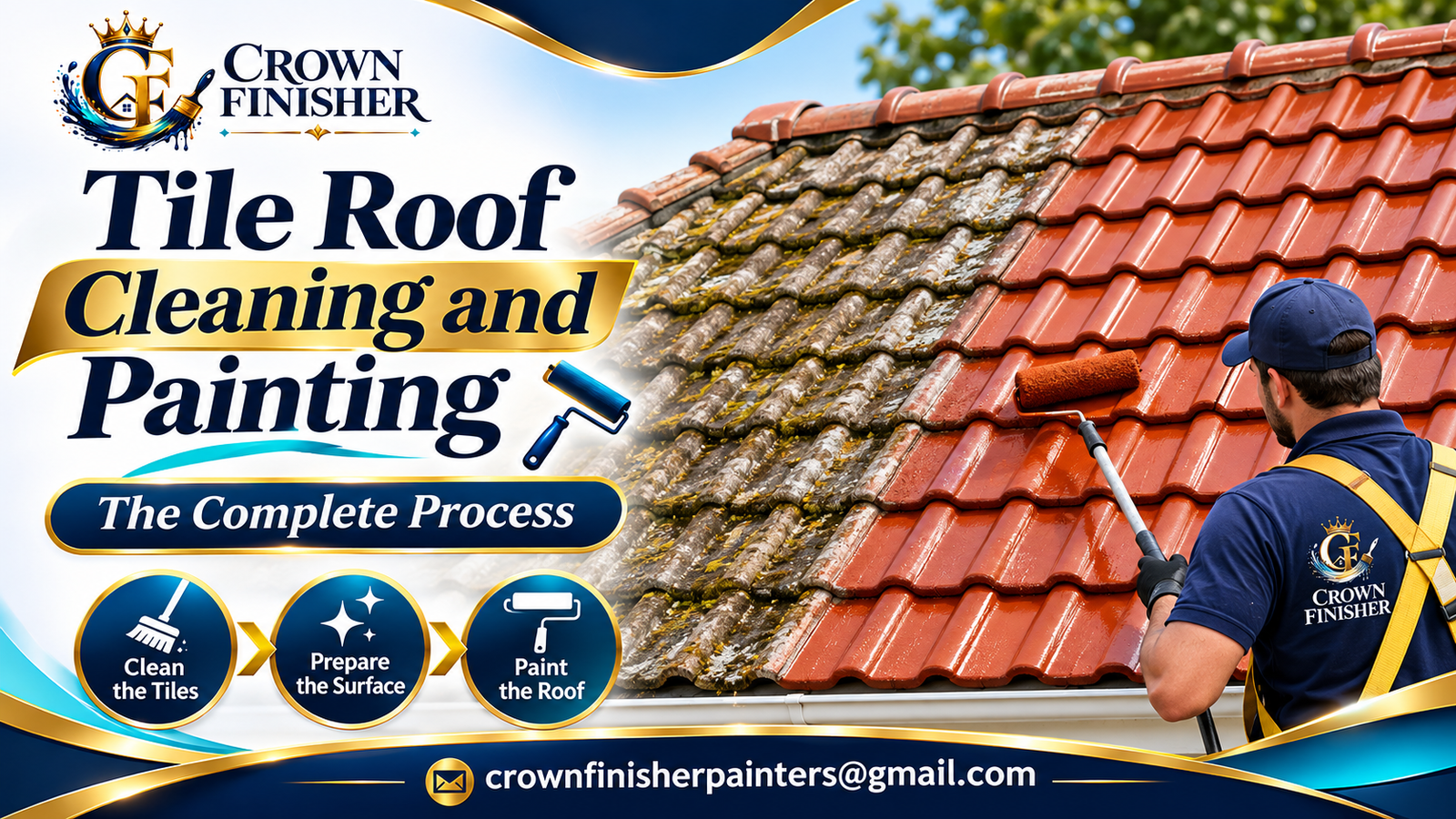
A tile roof can look great for decades, but Melbourne weather slowly takes its toll. Moss and lichen spread across the tiles, dirt and mould turn them dark and patchy, and the mortar holding the ridge caps in place starts to crack. Before long, the roof makes the whole house look older than it is.
Tile roof cleaning and painting brings that roof back to life. Done properly, it is far more than a quick wash and a coat of paint. This guide walks through the complete process, explains how terracotta and concrete tiles differ, and answers the questions homeowners ask most before booking a roof restoration.
Table of contents
Why tile roof cleaning matters
Roof tiles sit in full sun and rain every day. Over time, a few problems build up:
- Moss and lichen grow on the tiles, hold moisture against the surface and can lift the edges of tiles.
- Dirt, mould and pollution stain the tiles and make the roof look dull and dark.
- Blocked gutters and valleys fill with debris washed off the roof, which can lead to overflows and leaks.
- Worn surface coatings on concrete tiles leave them porous, so they absorb more water and grow more moss.
Regular tile roof cleaning removes this build up before it causes damage. When the roof also needs repairs or a new coating, cleaning is the essential first step of a full roof restoration.
Terracotta and concrete tiles: what each needs
Not all tile roofs are treated the same way. The type of tile decides whether painting is the right finish.
Concrete tiles
Best for: cleaning, sealing and paintingConcrete tiles leave the factory with a coloured surface coating that wears away over the years, leaving a porous, faded tile. They are the most common candidates for a full clean, sealer and two coats of roof paint.
Unglazed terracotta tiles
Best for: cleaning and sealing, or paintingFired clay tiles with a natural colour that runs right through. Many owners clean them and apply a clear or tinted roof sealer to keep the natural look, while others choose to paint them for a new colour.
Glazed terracotta tiles
Best for: cleaning and repairsGlazed tiles have a hard, glassy surface that coatings struggle to grip. They are usually cleaned, repaired and repointed rather than painted.
Older or mixed roofs
Best for: an inspection firstRoofs with replaced tiles, different tile batches or past repairs need a close look before choosing between sealing and painting, so the finished roof looks even.
Signs your tile roof needs cleaning or painting
- Green, black or orange patches of moss, lichen or mould.
- Faded, patchy or chalky tiles, especially on the sunny side of the roof.
- Cracked, chipped or slipped tiles.
- Crumbling or cracked mortar along the ridge caps and hips.
- Gutters that fill with grit, moss and debris soon after cleaning.
- Water stains on ceilings or damp patches in the roof space.
The tile roof cleaning and painting process
A full roof restoration follows a set order. Skipping a stage, especially the cleaning or repairs, is the most common reason a new roof coating fails early.
Inspect the roof
Check every section for broken tiles, cracked ridge capping, damaged valleys and flashings, and signs of leaks in the roof space. This decides what repairs are needed and which finish suits the tiles.
Replace broken tiles
Cracked and broken tiles are replaced with matching tiles where possible, so the roof is weathertight before anything else happens.
Treat moss and lichen
A moss and lichen treatment is applied to kill organic growth and loosen its grip on the tiles, which makes the clean far more effective and slows regrowth.
Pressure washing
The roof is pressure washed from the top down to remove moss, lichen, dirt and loose surface material. Pressure is controlled to suit the tiles so they are cleaned without being damaged. Gutters and downpipes are cleared of the washed off debris.
Rebedding and repointing
Loose ridge caps are rebedded and the ridges and hips are repointed with a flexible pointing compound. This seals the joints, holds the caps firmly in place and gives the roof a crisp, finished line.
Apply a roof sealer or primer
A sealer or primer is applied to bind any remaining chalky surface and help the topcoats grip. On unglazed terracotta that is not being painted, a clear or tinted roof sealer may be the final finish.
Apply two topcoats
Two coats of a quality roof coating made for tiles are sprayed on to give even colour, strong UV protection and a weather resistant finish.
Final check and clean up
The roof is checked for missed areas, gutters and downpipes are cleared again, and any overspray is cleaned from paths and surrounding surfaces.
Tiles crack easily under the wrong footstep. Experienced roof painters walk on the lower part of each tile, where it is supported by the tile beneath, and check for new cracks as they go.
Roof work is high risk. Proper fall protection, roof anchors and safe access are needed for work at height, and cleaning chemicals should be kept out of stormwater drains. This is a big reason most homeowners leave roof cleaning and painting to a professional team.
How to clean roof stains
Most stains on a tile roof fall into a few groups, and each needs a slightly different approach:
| Stain | What causes it | How it is treated |
|---|---|---|
| Green moss and algae | Shade and moisture | Moss treatment followed by pressure washing |
| Orange or grey lichen | Slow growing lichen in open sun | Lichen treatment, time to work, then washing |
| Black streaks and mould | Mould and airborne grime | Roof cleaning treatment and washing |
| Rust coloured marks | Runoff from metal flashings, aerials or fixings | A suitable rust stain remover, or covering with roof paint |
Some stains on old concrete tiles soak deep into the surface and will not fully clean up. On those roofs, sealing and painting is often the best way to get an even finish.
How to clean your roof safely
Clear leaves and debris first, apply a moss and lichen treatment, then wash the tiles with controlled pressure, working from the top of the roof down so dirty water runs away from cleaned areas. Avoid walking on tiles where you can, never wash upwards under the tile laps, and keep cleaning products out of stormwater drains. Because the job is done at height on a fragile surface, a professional team with the right safety gear is the safer choice for most homes.
Is painting a tile roof a good idea?
For concrete tiles, painting is usually a good idea once the original surface colour has worn away. A quality roof coating seals the porous tiles, helps them shed water, slows moss regrowth and makes the roof look new again. It is also a chance to change the colour, for example to a lighter shade that reflects more summer heat.
Unglazed terracotta can be painted, but many owners prefer to clean and seal it to keep its natural colour. Glazed terracotta generally should not be painted because coatings do not bond well to the glaze. On any tile roof, painting only lasts when the cleaning, repairs and repointing are done properly first.
When your home has a metal roof instead, see our guide to Colorbond roof painting in Melbourne.
What affects the cost of tile roof cleaning and painting?
Every roof is different, so the cost of a tile roof restoration depends on the job in front of you. The main factors are:
- Roof size and pitch: larger and steeper roofs take longer and need more safety equipment.
- Number of storeys and access: two storey homes and tight access add time.
- Tile type and condition: concrete, terracotta or glazed tiles each need different treatment.
- Moss, lichen and staining: heavy growth needs extra treatment and washing.
- Repairs: broken tiles, rebedding and repointing of ridge caps, and valley or flashing repairs.
- Finish: cleaning only, cleaning and sealing, or a full sealer and two topcoat system.
The best way to know the exact scope is a roof inspection followed by a written, itemised quote.
Tile roof restoration in Melbourne
Crown Finisher Painters has more than 10 years of experience and over 600 completed projects across Melbourne. Our roof painting service covers tile roof cleaning, moss and lichen treatment, broken tile replacement, rebedding and repointing, sealing and painting with quality coatings from trusted brands including Dulux and Taubmans.
Roof work is often paired with exterior painting or a full house repaint so the roof, gutters and walls all match. You can check whether we cover your suburb on our service areas page.
Frequently asked questions
Is painting a tile roof a good idea?
For concrete tiles, painting is usually a good idea once the surface colour has worn away, because a quality roof coating seals the porous tiles and restores their look. Unglazed terracotta can be painted or sealed, but glazed terracotta generally should not be painted because coatings do not bond well to the glaze. The roof also needs to be cleaned, repaired and repointed first.
How much does it cost to clean and repaint roof tiles?
The cost depends on the size and pitch of the roof, the number of storeys, the tile type, how much moss and lichen there is, how many tiles need replacing, whether the ridge capping needs rebedding or repointing, and the coating system chosen. Crown Finisher provides a free, written quote after inspecting the roof so you know the exact scope before work starts.
How much does it cost to get your roof tiles cleaned?
Cleaning alone depends on the roof size, height and pitch, how heavy the moss, lichen and staining are, whether a moss treatment is needed and how easy access is. A roof inspection is the best way to confirm the scope, and Crown Finisher offers free, written quotes.
How to clean your roof?
Clear leaves and debris, apply a moss and lichen treatment, then wash the tiles with controlled pressure, working from the top of the roof down so dirty water runs off. Avoid walking on tiles where possible and keep cleaning products out of stormwater drains. Because roof work happens at height, using a professional team with proper fall protection is the safer option.
How to clean roof stains?
Most roof stains come from moss, lichen, mould or runoff from metal. A suitable roof cleaning treatment kills organic growth so it can be washed away, while rust stains may need a specific stain remover. Stubborn stains on concrete tiles that will not clean up are often covered when the roof is sealed and painted.
Final thoughts
Tile roof cleaning is the foundation of any roof restoration. Once moss, lichen and dirt are gone and the tiles and ridge caps are repaired, a sealer and two quality topcoats can make an old concrete tile roof look new again, while terracotta can be cleaned and sealed to keep its natural charm.
When your roof is ready for a refresh, contact Crown Finisher Painters for a roof inspection and a free, written quote.