
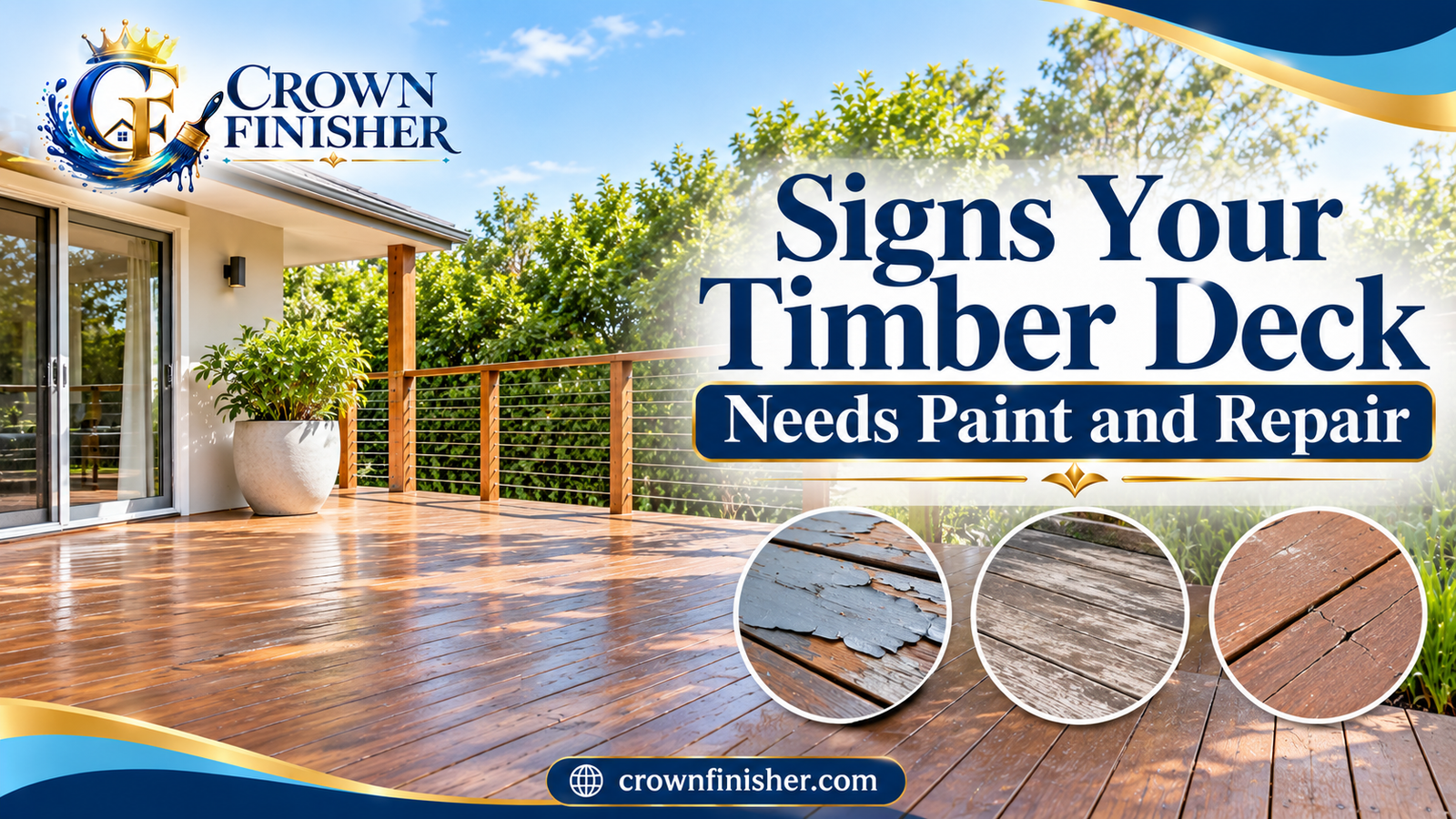
Most timber decks give plenty of warning before they fail. The trouble is that the early signs, a little peeling paint here, a loose nail there, are easy to ignore until a board cracks underfoot or a railing starts to wobble.
Knowing what to look for lets you catch problems while they are still small. Some signs only mean the deck needs a fresh coat of paint or stain. Others point to rotting boards or bad joists that need proper deck repair before anyone walks on it again. This guide covers both, so you can decide on the right next step for your deck in Melbourne.
Table of contents
Why Melbourne decks wear out
Timber is a natural material that moves with the weather. Melbourne decks deal with strong summer UV, cold wet winters and quick changes between the two. Each cycle of wetting and drying makes boards swell and shrink, which loosens fixings, opens up cracks and lets water deeper into the timber.
Once the protective coating wears through, the timber starts to grey, absorb water and grow mould. Left long enough, that moisture leads to rot, especially in boards close to the ground, around posts and where the boards sit on the joists. Regular deck painting or oiling slows all of this down, which is why the finish is your first line of defence.
Signs your deck needs paint or a new finish
These signs mean the coating has failed but the timber is usually still sound. A clean, sand and recoat will often fix them.
- Peeling paint or flaking stain. The coating has lost its grip, often because moisture has got underneath or the deck was not prepared properly last time.
- Grey, faded boards. UV has broken down the surface fibres and the timber has lost its natural colour.
- Water soaks in instead of beading. Sprinkle some water on the boards. When it darkens the timber straight away, the finish is no longer protecting it.
- Mould, mildew or black spots. Common in shady corners and between boards where moisture sits.
- Rough, splintery surface. Weathered fibres lift and catch on bare feet.
- Fine surface checking. Small cracks along the grain show the timber is drying out between coats.
Do the water test in a few different spots, including high traffic areas and shaded corners. Most decks wear unevenly, and the worst spot tells you how soon the whole deck needs attention.
Signs your deck needs repair
These signs go beyond the finish. They point to damage in the timber or the frame, and painting over them will not fix the problem.
Rotting boards
Boards that feel soft or spongy, look dark and crumbly, or break away when you press a screwdriver into them are rotting. Rot usually starts at board ends, around fixings and in areas that stay damp. Individual rotten boards can be replaced, but rot that keeps spreading is a sign that water is getting into the structure.
Splitting timber
Small surface checks are normal, but deep splits that run along a board, cross the board or open up at the ends weaken it. Badly split boards can trip people and let water straight into the timber, so they should be replaced.
Loose nails and screws
As timber moves, nails can lift above the surface and screws can lose their grip. Raised nail heads are a trip hazard and tear up sanding pads. Popped nails are usually punched back down or replaced with decking screws, which hold much better over time.
Bouncy, sagging or uneven boards
A deck that bounces, dips or feels uneven underfoot can mean the joists are damaged, undersized or spaced too far apart. Cupped or warped boards can also point to moisture problems underneath.
Wobbly railings and stairs
Railings, balustrades and stairs take a lot of force. Any movement, rot at the base of posts or loose stair treads should be fixed straight away, as these are the parts most likely to cause a fall.
How to tell if deck joists are bad
The boards are only as good as the frame underneath. Joists and bearers are hidden from view, so problems can grow for years before you notice them on top. Here is how to check.
Look underneath with a torch
Get under the deck or look through gaps in the boards. Look for dark water stains, fungus, white or brown growth and timber that looks crumbly or broken.
Do the screwdriver test
Push a flat screwdriver into the joists, especially at the ends and where they sit on the bearers. Healthy timber resists. Rotten timber is soft and lets the blade sink in easily.
Check the fixings and brackets
Rusted joist hangers, loose bolts and corroded nails all weaken the connections that hold the frame together.
Inspect the posts and footings
Check where posts meet the ground or the footings. This is where rot and movement usually start, and a leaning or soft post affects the whole deck.
Look for termite signs
Mud trails on posts or footings, hollow sounding timber and fine dust are warning signs of termite activity, which needs a licensed pest inspector.
Damaged joists, bearers, posts or railings are a safety issue. When the frame itself is affected, have it assessed by a registered builder or qualified carpenter before the deck is used or refinished.
Paint, repair or replace?
Once you know what you are dealing with, the next step is usually clear.
| What you see | Likely next step |
|---|---|
| Faded, grey or peeling finish on sound boards | Clean, sand and repaint, restain or reoil |
| A few rotten, split or cupped boards | Replace those boards, then refinish the deck |
| Raised nails and loose screws | Punch down or refix with decking screws |
| Soft or rotten joists in one area | Structural repair by a builder or carpenter |
| Rot through many joists, bearers or posts | Deck replacement is often the better option |
When the frame is sound, even a deck that looks very tired can usually be brought back with board repairs and a full deck restoration. It is when the structure underneath has failed that replacement starts to make more sense.
What is the lifespan of a timber deck?
There is no fixed lifespan for a timber deck. A well built hardwood deck that is cleaned and recoated regularly can last 20 years or more. Treated pine decks, decks built close to damp ground, and decks with poor airflow underneath tend to need major work sooner.
The biggest factors are:
- Timber type. Durable hardwoods resist rot and wear better than softer timbers.
- Construction. Good drainage, airflow under the deck and quality fixings all add years.
- Exposure. Full sun and constant rain wear a deck faster than a covered or sheltered one.
- Maintenance. A deck that is cleaned and recoated before the finish fails lasts far longer than one left bare.
How to make your deck last longer
- Sweep leaves and dirt off regularly so moisture does not sit on the boards.
- Wash the deck with a timber deck cleaner once or twice a year.
- Recoat as soon as water stops beading, before the timber turns grey.
- Fix loose nails and screws as soon as you notice them.
- Keep garden beds, soil and mulch away from the deck frame and posts.
- Use pot plant feet so water can drain and air can move under pots.
Deck repair and painting in Melbourne
Crown Finisher Painters has more than 10 years of experience and over 600 completed projects across Melbourne. Our deck painting service includes cleaning, sanding, fixing loose boards and popped nails, replacing damaged boards and applying a quality finish from brands such as Dulux and Taubmans. Where the frame needs structural work, we will tell you before any painting starts.
Deck work often goes hand in hand with exterior timber painting for pergolas and screens, and fence painting for the rest of the yard. You can check whether we cover your suburb on our service areas page.
Frequently asked questions
What are the signs that my deck needs to be replaced?
Replacement is usually needed when rot has spread through many boards or into the joists and bearers, when the frame sags or bounces, when posts have moved or rotted at ground level, or when repairs would add up to nearly the same work as a new deck. A few bad boards on a sound frame can normally be replaced one by one.
What is the typical lifespan of a wooden deck?
There is no fixed number. A well built and well maintained hardwood deck can last 20 years or more, while treated pine decks often need major work sooner. Sun exposure, airflow under the deck, how close it sits to the ground and how often it is recoated all make a big difference.
How long should a timber deck last?
With good construction and regular cleaning and recoating, a timber deck should give many years of service, often well beyond a decade. Decks that are left uncoated, sit close to damp ground or have poor airflow underneath tend to fail much earlier.
How to tell if deck joists are bad?
Look underneath with a torch and push a flat screwdriver into the joists, especially near the ends and where they sit on the bearers. Timber that is soft, crumbly or lets the blade sink in easily is likely rotten. Sagging, bouncing underfoot, dark water stains, fungus, rusted brackets and termite mud trails are other warning signs.
Final thoughts
Peeling paint, grey boards and water soaking in are signs your deck needs a new finish. Rotting boards, splitting timber, loose nails, bouncy sections and soft joists are signs it needs repair first. Checking your deck once a year, ideally before summer, makes it far easier to catch problems while they are still small.
When you are not sure what your deck needs, get in touch with Crown Finisher Painters for an inspection and a free, written quote.