
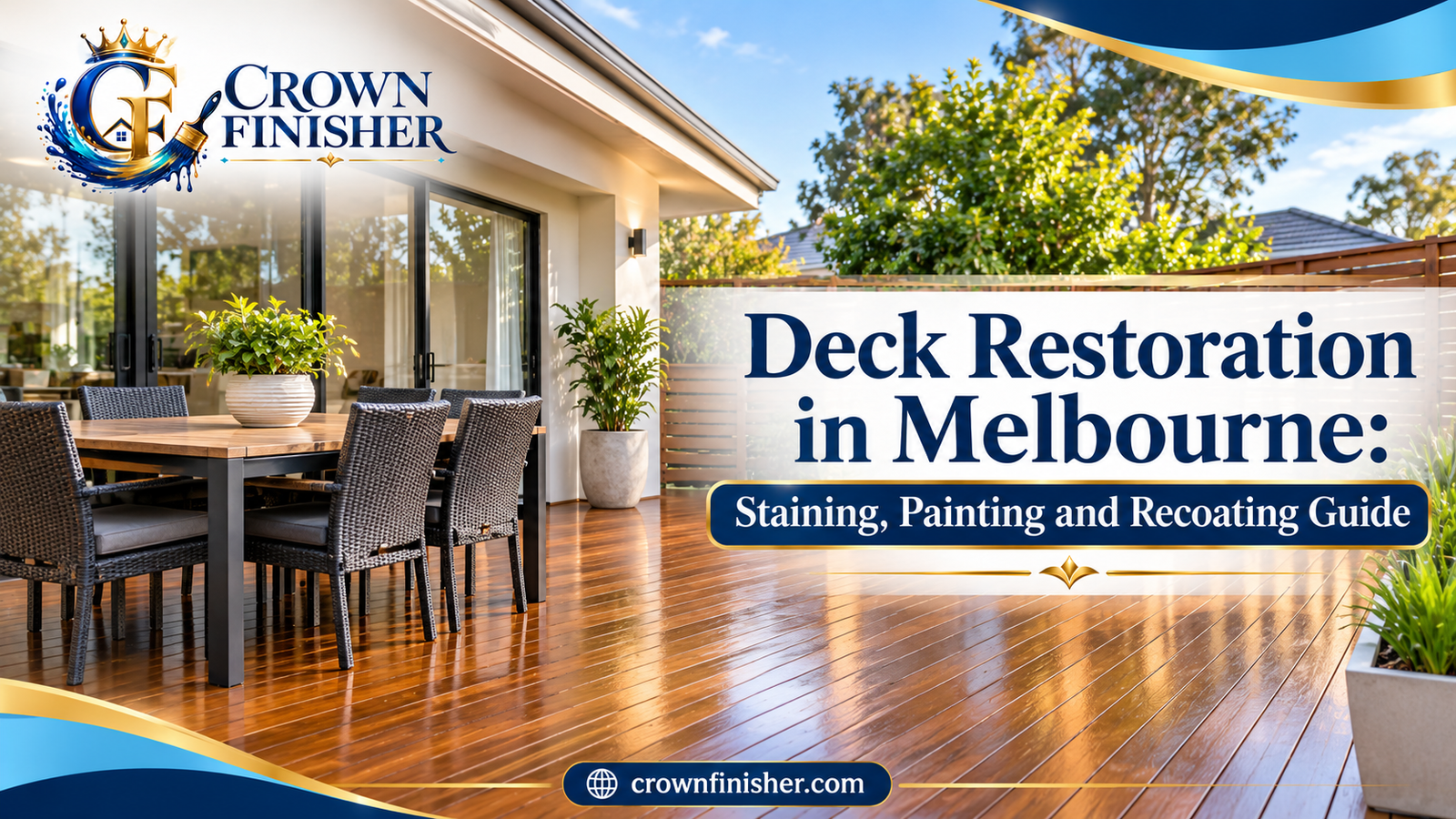
Melbourne is hard on timber decks. Summer UV bleaches the boards, winter rain soaks into the end grain, and the swing between the two makes timber swell, shrink and split. Within a few seasons, a deck that once looked rich and warm can turn grey, rough and patchy.
The good news is that most weathered decks do not need replacing. A proper deck restoration in Melbourne usually means repairing what is loose, cleaning and sanding back to fresh timber, then applying the right finish. This guide walks through each stage, explains the difference between deck staining, deck painting and recoating, and covers the timing questions that trip up most homeowners.
Table of contents
Signs your deck needs restoring
A deck rarely fails overnight. These are the signs that it is time for more than a quick sweep:
- Grey, silvery boards. UV has broken down the surface fibres. New coatings will not bond well until that grey layer is removed.
- Water soaks straight in. Sprinkle water on the boards. When it darkens the timber instead of beading, the old finish has worn away.
- Peeling or flaking coating. Common on decks that were painted or coated with a film forming product without enough preparation.
- Rough, splintery surface that catches bare feet.
- Black spots, mould or a green tinge in shaded corners and between boards.
- Raised nails, loose screws or boards that move when you walk on them.
- Worn deck railings where the coating has gone chalky or cracked.
Soft or crumbling timber, especially near the ground or around posts, is a different problem. That points to rot, and those boards or joists need repair before any finish goes on.
Seal, stain, oil or paint? Choosing the right deck finish
The finish you choose decides how your deck looks, how often it needs attention and how it will be maintained later. There is no single best product. The right one depends on the timber, how much sun the deck gets and the look you want.
Decking oil
Best for: hardwood decks and a natural lookPenetrates into the timber and brings out the grain. Easy to recoat because there is no film to peel, but it needs more frequent maintenance coats in full sun.
Water based deck stain
Best for: colour with some grain showingAdds pigment for better UV protection and evens out mismatched boards. Dries quickly, has low odour and cleans up with water.
Deck paint
Best for: older or patchy decksA solid colour coating that hides stains and repairs. Strong UV protection, but it covers the grain and must be sanded off to go back to oil.
Clear deck sealer
Best for: new or sheltered decksRepels water while keeping the timber looking almost untreated. Offers the least UV protection, so it fades faster on sunny decks.
Is it better to seal or stain a deck?
For most Melbourne decks that face the sun, a stain or pigmented oil outlasts a clear sealer because the pigment shields the timber from UV. A clear deck sealer makes sense on a newer deck, a covered area, or where you want the timber to look as close to natural as possible.
Is painting a deck a good idea?
Painting can be a smart choice for an older deck with stained, patched or mismatched boards, or when you want the deck to match the house colours. Use a dedicated deck paint, not wall paint, and a primer where the manufacturer recommends one. Keep in mind that deck paint forms a film, so worn walkways will show sooner, and moving back to a natural finish later means a full sand back.
Many hardwoods common in Melbourne decks, such as merbau and spotted gum, release natural tannins and oils. New boards often need to weather for several weeks before they will accept a finish. Check with your timber supplier or the product label before coating new decking.
How to restore a weathered deck, step by step
Every deck is different, but a proper restoration follows the same order. Skipping steps is the main reason new finishes peel or fade within months.
Inspect and repair
Walk the whole deck. Replace rotten or badly split boards, tighten loose screws, punch down raised nails and check the joists and bearers underneath for soft spots. Repairs come first so the new finish covers sound timber.
Clean the boards
Apply a timber deck cleaner and scrub with a stiff broom to lift dirt, grease and mould, then rinse well. A pressure washer can help on a low setting with a wide fan nozzle, but too much pressure tears the soft timber and leaves a furry surface.
Strip or sand back the old finish
Deck sanding removes the grey top layer and any failing coating so the new finish soaks into fresh timber. Use a floor sander for the boards and an edger or orbital sander for edges, steps and deck railings. Heavy film coatings may need a chemical stripper first.
Let the timber dry
After washing, timber needs time to dry out before coating, often a day or two in mild weather. Coating damp boards traps moisture and leads to a blotchy, short lived finish.
Prime where needed
When switching to deck paint, apply the primer recommended by the paint manufacturer. Oils and most stains go straight onto bare, clean timber.
Apply the first coat
Coat along the full length of two or three boards at a time, working with the grain and keeping a wet edge to avoid lap marks. Do the board edges and ends too, as that is where water gets in first.
Apply the second coat and let it cure
Once the first coat is dry, apply a second for even colour and longer lasting protection. Keep foot traffic, pets and furniture off the deck until the product has cured, as listed on the label.
Before you start, sprinkle water on a sanded board. When it soaks in within a minute, the timber is ready to take oil or stain. When it beads, there is still coating or contamination on the surface that needs more sanding or cleaning.
Best time to stain a deck in Melbourne
Timing matters as much as the product. In Melbourne the most reliable windows are usually mid spring and early autumn, roughly October to November and March to April. Days are mild, the timber has dried out after winter or before it, and the finish has time to soak in before it dries.
When should you not stain a deck?
- When rain is forecast within 24 hours of coating.
- When the boards are still damp from cleaning, rain or morning dew.
- In direct midday sun on a hot day, when the stain dries before it can penetrate.
- On very windy days that blow dust and leaves into the wet finish.
- When the temperature is below the minimum listed on the product label.
On summer jobs, starting early and following the shade around the deck helps avoid lap marks and patchy colour.
Drying times and recoating
Drying times vary by product, temperature and humidity, so the label is always the final word. As a general guide:
| Finish | Touch dry | Second coat | Light foot traffic |
|---|---|---|---|
| Water based deck stain | About 1 to 2 hours | Usually a few hours | After about 24 hours |
| Oil based stain or decking oil | Several hours | Often the next day | Often 24 to 48 hours |
| Water based deck paint | About 1 to 2 hours | Usually a few hours | After about 24 hours |
Allow longer before putting heavy furniture, pot plants or a barbecue back, as the coating keeps hardening for days after it feels dry.
Can I paint over a stained deck?
Yes, with the right preparation. The deck needs to be cleaned, sanded to remove loose stain and any sheen, and tested to make sure water soaks in. A primer recommended by the paint maker then helps the deck paint grip. Painting over a fresh or oily stain is a common cause of peeling.
Recoating and resealing
A recoat is a maintenance coat applied while the existing finish is still in reasonable shape. It usually needs only a clean and a light sand, not a full strip back, which is why regular recoating is the easiest way to keep a deck looking good.
Choosing deck stain colours
Deck stain colours range from clear and natural timber tones through to rich browns, greys and almost black. A few practical points help narrow the choice:
- Mid tones are the most forgiving. Warm browns and soft greys hide dirt, leaves and wear better than very pale shades.
- Very dark colours get hot. On a deck in full afternoon sun, dark boards can become uncomfortable underfoot.
- Test on your own timber. The same stain looks different on merbau, spotted gum and treated pine, so try a sample on a spare board or a hidden spot.
- Think about the whole house. Choose a deck colour that works with the walls, trims, fence and outdoor furniture.
When the deck is part of a bigger refresh, it often makes sense to plan the colours alongside your exterior house painting so everything ties together.
How long will the finish last?
There is no fixed lifespan, because sun, foot traffic, shade and preparation all play a part. As a rough rule, oils on a sunny Melbourne deck often want a maintenance coat around once a year, stains a little less often, and a well prepared deck paint can last several years before a full recoat. Stairs, doorways and walkways always wear first.
A few simple habits stretch the time between restorations:
- Sweep regularly so leaves and dirt do not sit on the boards.
- Wash the deck once or twice a year with a timber deck cleaner.
- Use pot plant feet and furniture pads so water does not pool.
- Recoat when water stops beading, before the timber turns grey again.
Restore, recoat or replace?
Most homeowners want the most economical way to refresh an old deck. The answer depends on the condition of the timber and the frame underneath.
- Recoat when the finish is faded but the boards are smooth and sound. A clean, light sand and a maintenance coat is the simplest and most cost effective option.
- Restore when the boards are grey, rough or peeling but structurally solid. This means repairs, a full clean, deck sanding and two fresh coats.
- Replace sections when boards are rotten, badly cupped or split, or when joists are soft. Replacement boards can then be blended in with the rest of the deck during the restoration.
Catching a deck at the recoat stage is almost always cheaper than leaving it until it needs full resurfacing.
Professional deck restoration in Melbourne
A deck restoration is a solid weekend project for a confident DIYer, but sanding a large deck, stripping old paint or repairing rotten boards takes the right equipment and plenty of time. Crown Finisher Painters has more than 10 years of experience and over 600 completed projects across Melbourne, and our deck painting and restoration service covers cleaning, sanding, repairs and quality finishes from trusted brands such as Dulux and Taubmans.
We often pair deck work with exterior timber painting for pergolas, screens and posts, or fence painting so the whole outdoor area looks finished. You can see examples on our before and after gallery, and check whether we cover your suburb on the service areas page.
Frequently asked questions
How do you restore a weathered deck in Australia?
Start by fixing loose boards and punching down nails, then clean the deck with a timber deck cleaner to remove dirt, grey fibres and mould. Sand back old coatings and weathered timber, let the boards dry fully, then apply two coats of a decking oil, deck stain or deck paint made for outdoor timber and Australian UV.
What is the best way to resurface a deck?
For most timber decks the best way to resurface is a thorough clean followed by deck sanding with a floor sander and an edger. Sanding removes the failed finish and the grey top layer so the new coating soaks into fresh timber. Badly cupped or split boards should be replaced rather than sanded.
Is it better to seal or stain a deck?
It depends on the look you want. A clear sealer keeps the timber looking natural and repels water but offers little UV protection, so it suits new or sheltered decks. A stain adds pigment, which blocks more sun and evens out patchy timber, so it usually lasts longer on a deck that faces full sun.
Is painting a deck a good idea?
Painting suits older decks with stained, patchy or mismatched boards because it gives a solid colour and strong UV protection. The trade off is that deck paint hides the grain and can wear through in high traffic areas, and switching back to oil later means sanding the paint off.
What is the best method for staining a deck?
Clean and sand the deck, wait until the timber is dry, then stir the stain well and apply it along the length of two or three boards at a time with a brush or applicator pad. Work in the shade, keep a wet edge, wipe off any excess that does not soak in, and apply a second coat once the first is dry.
Should you pressure wash a deck before staining?
A pressure washer can help, but only on a low setting with a fan nozzle held well back from the boards. Too much pressure tears up the soft timber and leaves a furry surface. A deck cleaner and a stiff broom, followed by a gentle rinse, is often the safer choice.
What month is the best time to stain a deck?
In Melbourne, mid spring and early autumn are usually the best times, roughly October to November and March to April. Temperatures are mild, the timber has a chance to dry out, and there is less risk of the stain drying too fast in summer heat or staying wet in winter.
When should you not stain a deck?
Avoid staining when rain is forecast within 24 hours, when the boards are still damp from cleaning or dew, in direct midday sun on a hot day, on very windy days, or when the temperature is below the minimum listed on the product label.
How long does deck stain take to dry?
Most water based deck stains are touch dry in one to two hours and ready for a second coat in a few hours. Oil based stains and decking oils take longer, often overnight or more. Allow at least 24 hours before light foot traffic and longer before putting furniture back, and always follow the product label.
Can I paint over a stained deck?
Yes, provided the stain is well worn and the surface is prepared. Clean the deck, sand it to remove loose stain and gloss, check that water soaks in rather than beading, then use a primer recommended by the paint maker before applying deck paint. Painting over a fresh, oily stain usually leads to peeling.
What is the best colour to paint a deck?
Mid tones such as warm greys, soft browns and timber shades are usually the most practical because they hide dirt and leaves better than very light colours and stay cooler underfoot than very dark ones. Choose a colour that sits well with your house walls, trims and fence.
How long will paint last on a deck?
It depends on sun exposure, foot traffic, the product and the preparation. A well prepared deck finished with a quality deck paint can last several years before a full recoat, while stairs and walkways may need touching up sooner.
What is the cheapest way to redo a deck?
The most economical option is usually to clean the deck and apply a maintenance coat of oil or stain before the old finish fails completely. Catching a deck early avoids the extra sanding and board replacement that a neglected deck needs.
Final thoughts
A tired deck is rarely a lost cause. Fix what is loose, clean and sand back to fresh timber, choose a finish that suits your boards and your weather, and apply it on a mild, dry day. Then keep up with regular recoats and your deck will stay a place you actually want to use.
Whether you want a natural oiled look, a richer stain or a solid painted finish, the preparation is what makes it last. If you would rather leave it to a licensed team, get in touch with Crown Finisher Painters for a free, written quote.